You know that feeling. You see a gorgeous new sofa online, but you have absolutely no idea if it will fit in your living room, or if that color “misty slate” is actually just… gray. For decades, that’s been the fundamental gap in product marketing: the chasm between seeing something and experiencing it. Well, that gap is closing. Fast.
Enter spatial computing and augmented reality (AR). This isn’t just about fun filters on social media anymore. We’re talking about a tectonic shift in how brands connect products to people. It’s about layering digital information—products, data, experiences—seamlessly onto your physical world. And for marketers, it’s nothing short of a superpower.
Beyond the Screen: What We Really Mean by “Experiential”
Let’s be clear. “Experiential marketing” got thrown around a lot pre-pandemic, often meaning a flashy pop-up or an Instagrammable event. That was great, honestly. But it was limited by geography and scale. Spatial computing and AR democratize that experience. They bring the “wow” moment directly to the customer, wherever they are.
Think of it this way: instead of telling a customer about a product’s features, you let them live with them, if only virtually. You’re not just showing a spec sheet; you’re creating a memory of ownership before the purchase even happens. That’s a profound psychological shift.
The Core Mechanics: How AR and Spatial Tech Create Value
So how does this magic actually work in practice? It boils down to a few key applications that solve real, everyday shopping pain points.
1. Visualization & “Try-Before-You-Buy”
This is the big one, the gateway drug for most consumers. Using their smartphone or AR glasses, a customer can project a 3D model of a product into their own space.
- Furniture & Home Decor: See if that armchair crowds the hallway. IKEA Place and Wayfair’s View in Room 3D are classics here.
- Fashion & Accessories: Virtual try-on for sunglasses, makeup, hats, and even sneakers. Warby Parker and Sephora nailed this early.
- Beauty & Cosmetics: This is huge. Apps can analyze your skin tone and facial structure to show how a lipstick shade or eyeshadow palette actually looks on you, not just a model.
The result? A massive reduction in purchase anxiety. It’s like having a personal showroom that fits in your pocket.
2. Interactive Storytelling & Product Demos
Some products are just hard to explain. A technical gadget, a complex appliance, a new material. Spatial computing lets the product tell its own story. Point your phone at a product on a shelf or in an ad, and watch it come to life—showing its inner workings, demonstrating its use, or playing a testimonial.
Imagine pointing your phone at a camping tent and seeing a 3D animation of it being set up in 30 seconds, right there on the store floor. Or seeing the airflow dynamics of a new fan. It transforms a static object into a dynamic teacher.
3. Contextual Information & Layerable Data
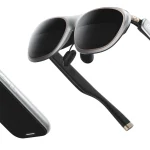
This is where spatial computing starts to feel like the future. With devices like Apple Vision Pro or Meta Quest, digital information can be pinned in your physical space. You could have a virtual, life-sized model of that new car in your garage for a week. You could walk around it, change its color with a glance, and see performance stats floating in the air next to the tires.
It’s product marketing that exists not on a page, but in your environment. It’s persistent and interactive in a way a brochure or website simply can’t be.
The Tangible Benefits (It’s Not Just Cool, It’s Effective)
Sure, the tech is impressive. But what does it actually do for the bottom line? The data, and the logic, are compelling.
| Benefit | How AR/Spatial Computing Drives It |
| Reduced Return Rates | When customers can visualize fit, scale, and style accurately, they make more confident purchases. This is a direct cost saver. |
| Higher Conversion & Engagement | Interactivity dramatically increases time spent with a product. More engagement typically translates to a higher likelihood to buy. |
| Lowered Barrier for Big-Ticket Items | It’s easier to justify a major purchase when you’ve essentially “test-driven” it in your home or workspace. |
| Viral & Shareable Content | People love sharing AR experiences—a virtual try-on, a funny product placement in their home. It’s organic, user-generated marketing. |
| Rich Data & Insights | Brands can see which colors/products are tried on most, how long interactions last, what contexts users prefer. This is gold for R&D and marketing. |
The Human Hurdles and Real-World Considerations
It’s not all seamless, of course. The technology has friction. App downloads can be a barrier. Not every smartphone handles high-end AR perfectly. And creating photorealistic 3D assets? That’s an investment.
Perhaps the biggest challenge is designing experiences that are genuinely useful, not just gimmicky. The best AR feels like a natural extension of the shopping journey—a helpful tool, not a distracting game. It has to solve a problem, not create one.
And then there’s the privacy question. Spatial computing, by its nature, understands your space. That data is sensitive. Winning consumer trust here is non-negotiable. Transparency is key.
Where This Is All Heading: The Blended Reality
We’re moving toward a world where the line between digital and physical product marketing will simply… dissolve. The next wave isn’t just about viewing a product in your room. It’s about that product interacting with your other devices, remembering your preferences, and even allowing for virtual customization that feels tactile.
Think about a spatial computing experience for a new car where you can not only see it in your driveway, but hear the engine sound, feel (via haptics) the texture of the leather on the steering wheel, and then configure the dashboard display with a gesture. The experience is the advertisement.
Honestly, the brands that will win aren’t just the ones with the biggest tech budgets. They’re the ones who understand that this technology is ultimately about empathy. It’s about recognizing the customer’s uncertainty—about size, color, function, style—and dissolving it with a layer of helpful, magical clarity.
It turns marketing from a broadcast into a conversation. And it turns products from distant images into tangible parts of our lives, before we ever own them. That’s a story worth telling, not on a page, but in the world around us.