
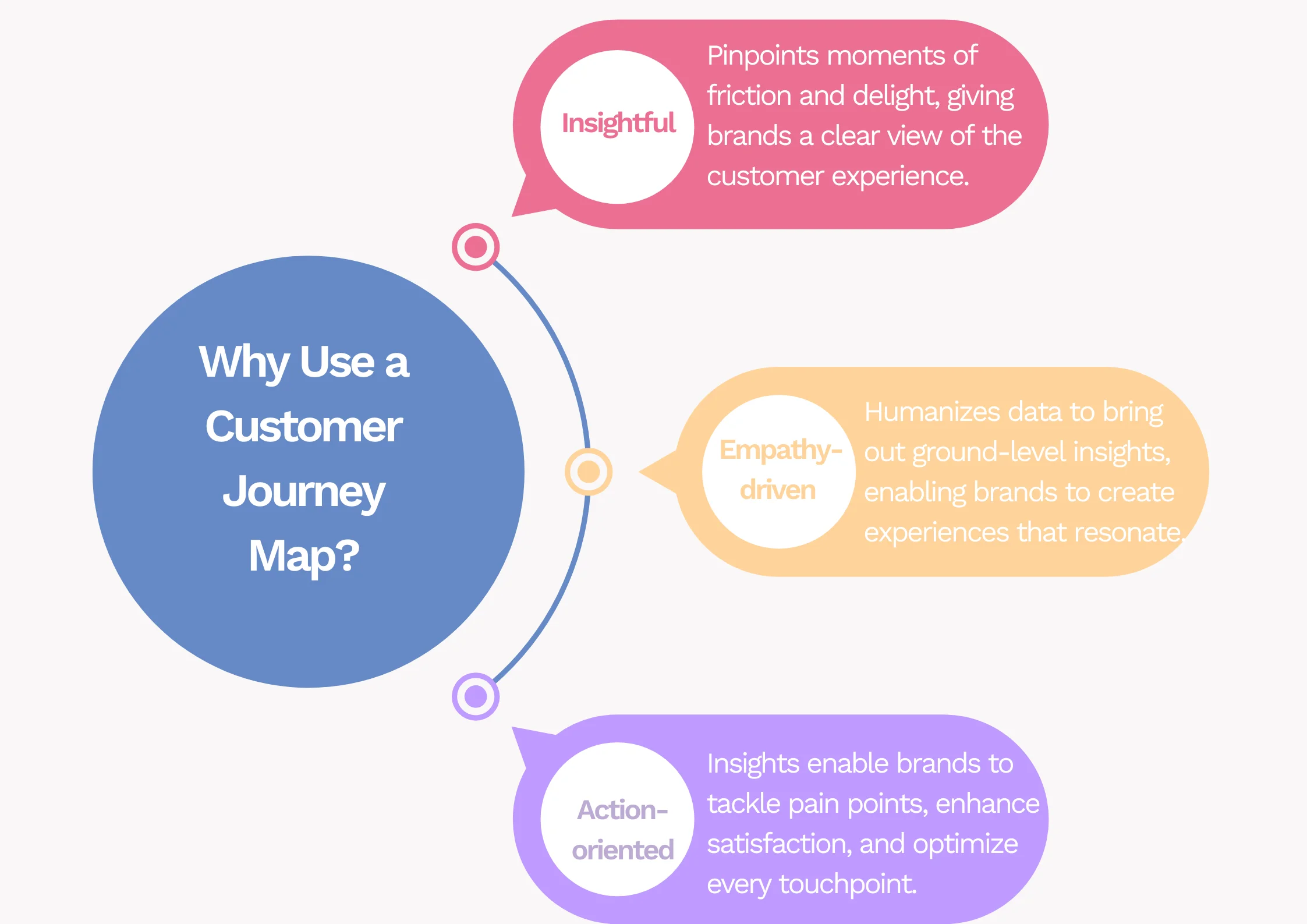
Let’s be honest. The old way of mapping customer journeys? It’s a bit like using a paper map from 1998 to navigate a city that’s constantly rebuilding its streets. Sure, you get the general idea—awareness, consideration, purchase—but the real-time detours, the personal shortcuts, the emotional potholes? They’re completely missing.
That’s where AI changes everything. It’s not just about drawing the map anymore. It’s about giving every single customer a map that’s drawn uniquely for them, in real-time, and then having a friendly guide (read: an automated workflow) walk them along the path. This is hyper-personalized customer journey mapping and automation. And it’s the difference between shouting into a crowded room and having a quiet, insightful conversation with each person in it.
What Hyper-Personalization Really Means (It’s Not Just a Name Tag)
We’ve all been there. You buy a coffee maker online, and for weeks, every site you visit shows you… more coffee makers. That’s basic personalization, and frankly, it’s gotten a bit creepy and lazy. Hyper-personalization is different. It’s predictive, not reactive.
Think of it this way: if personalization is knowing I like coffee, hyper-personalization is knowing I prefer light roast, buy beans every two weeks on a Thursday, read reviews about ethical sourcing, and just watched a tutorial on latte art. It understands context and intent. AI makes this possible by stitching together data from a million different threads—browsing behavior, past purchases, email engagement, support ticket sentiment, even time of day—to predict what I might need next. Not what someone like me might need. What I might need.
The AI Engine Room: How It Actually Works
So, how does the magic happen? It’s less magic, more sophisticated data plumbing. AI for customer journey mapping works in a few key layers:
- Unified Data Ingestion: First, AI pulls data from every touchpoint—your CRM, email platform, website analytics, support chats, social media. It breaks down those dreaded data silos.
- Pattern Recognition & Prediction: Here’s the core. Machine learning algorithms sift through that ocean of data to find patterns. They can predict things like churn risk, next likely purchase, or the best channel to reach someone on a Tuesday morning.
- Dynamic Segmenting (or, Segment-of-One): Instead of static segments like “Women 25-40,” AI creates micro-segments that constantly evolve. You might have a segment of one: “Customer ID #4567, currently researching enterprise plans, just downloaded a whitepaper, and seems frustrated by pricing page.”
- Real-Time Trigger Identification: AI spots micro-moments—a cart abandonment, a support article re-read three times, a video watched to 95% completion—and flags them as opportunities for immediate, personalized action.
From Insight to Action: Automating the Hyper-Personalized Journey
Mapping is pointless without action. This is where automation comes in—not as a blunt, repetitive tool, but as the graceful conductor of the personalized symphony AI composes.
You know that “segment-of-one” we talked about? Here’s what automation can do for them, automatically:
| Customer Signal (Spotted by AI) | Hyper-Personalized Automated Action |
| Spends 10 mins on pricing page, then visits “Contact Sales” but doesn’t fill form. | Triggers a personalized email from a sales rep with a specific case study, and a calendar link for a 10-min chat. The next website visit shows a tailored message in the header. |
| Repeats a support query about “API integration limits.” | Automatically routes them to your top API specialist, and sends a follow-up with advanced developer documentation they haven’t seen. |
| Purchases a high-end product. | Enrolls them in a premium onboarding drip series (not the standard one), and suppresses all promotional emails for 14 days while they get set up. |
The beauty is it all feels… human. Because the action is so relevant, it feels attentive, not robotic. It’s automation with empathy, you could say.
The Tangible Wins: Why Bother?
This isn’t just tech for tech’s sake. The business impact is real. Companies using AI-driven personalization see things like a 20-30% lift in marketing campaign performance, sometimes way more. Customer satisfaction scores climb because you’re solving problems before they become frustrations. And revenue? It grows because you’re effectively guiding people to the value they’re already seeking, with less friction.
You also save your team from the grind of manual segmentation and guesswork. They can focus on strategy and creative, while AI handles the heavy, data-driven lifting of journey orchestration.
Getting Started (Without Needing a PhD in Data Science)
This might sound like a massive undertaking. And it can be. But you can start small. Honestly, you should. Here’s a practical path:
- Pick a Single, High-Value Journey: Don’t boil the ocean. Start with one, like “new customer onboarding” or “post-purchase support.” Where do people most often get stuck or drop off?
- Audit Your Data Accessibility: Can your tools talk to each other? You’ll need a CDP (Customer Data Platform) or a marketing automation tool with decent AI capabilities to be the central brain.
- Define Clear Micro-Goals: What does success look like for this journey? Reduced support tickets? Faster time to first value? A second purchase? Be specific.
- Implement, Test, and Listen: Launch your AI-powered automation for that one journey. Then watch, measure, and tweak. The AI learns, but you need to guide it with business logic.
A word of caution—and it’s an important one. With great data comes great responsibility. Transparency about data use and rock-solid security aren’t just nice-to-haves; they’re the bedrock of trust. Hyper-personalization walks a fine line between being helpful and being intrusive. The goal is to surprise and delight, not to stalk and scare.
The Future Isn’t Mapped, It’s Grown
In the end, using AI for hyper-personalized journey mapping and automation means letting go of the idea of a fixed, linear path. A customer’s journey isn’t a straight line you plot. It’s more like a garden you cultivate. You plant the right seeds (content, offers, support), you use AI as your smart irrigation system (delivering the right resource at the perfect time), and you create an environment where each unique plant—each customer—can thrive in their own way.
The map is no longer a static document. It’s a living, breathing, adapting layer of your business logic. And that’s a journey worth taking.


